
For patients with MDS, close monitoring by doctors may help determine the appropriate timing to undergo stem cell transplants before the disease worsens.
For patients with MDS, close monitoring by doctors may help determine the appropriate timing to undergo stem cell transplants before the disease worsens.
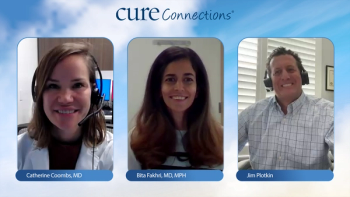
Jim Plotkin shares his personal experience with CLL, including his initial symptoms, the diagnostic process, challenges faced, and advice for patients with newly diagnosed CLL. Medical experts discuss their approach to explaining CLL to new patients and inquire about essential patient education resources.
Medical experts provide an overview of chronic lymphocytic leukemia (CLL), including its typical symptoms and diagnostic process. They also will inquire about key prognostic factors and their impact on patient care.

Patients who have a higher risk of head and neck cancer recurrence can expect more — and sooner — monitoring of their disease.
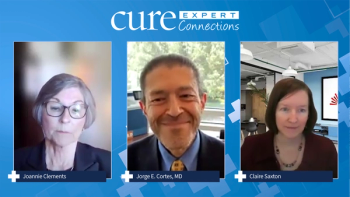
The panel concludes its discussion with insights on challenges and unmet needs in the CML treatment landscape, highlighting ways to better support patients and caregivers.
One expert explained why chronic lymphocytic leukemia is erroneously considered a ‘good cancer.’
From social work to cardio-oncology, there is a wide array of resources potentially available to patients, as one expert explained.
One expert explains why most of the time clinical trial enrollment is ‘the correct answer’ for patients.
There have been major treatment advancements for CLL in the last decade, with future generations of drugs on the horizon.
Experts discuss unmet needs and challenges faced by patients with uveal melanoma. This program was made possible with support from Immunocore.
Nathan L. Scott, M.D., discusses the safety and efficacy of tebentafusp. This program was made possible with support from Immunocore.
Nathan L. Scott, M.D., provides a brief overview of the current guidelines for treatment of metastatic uveal melanoma, as well as what considerations go into choosing the appropriate treatment for it. This program was made possible with support from Immunocore.
Nathan L. Scott, M.D., discusses the risk of recurrence within diagnosed uveal melanoma patients. Uveal Melanoma Prognosis and Risk Stratification
Nathan L. Scott, M.D., details what tests a patient should expect if they wish to confirm a uveal melanoma diagnosis. This program was made possible with support from Immunocore.
Melody Burchett discusses how she educates patients who have been recently diagnosed with uveal melanoma. Resources for Patients With Newly Diagnosed Uveal Melanoma
Melody Burchett discusses her journey with uveal melanoma and the formation of A Cure in Sight. This program was made possible with support from Immunocore.
After a brief introduction, Nathan L. Scott, M.D., gives an overview of uveal melanoma, including the risk factors and ways to help prevent it. This program was made possible with support from Immunocore.
Experts on chronic myeloid leukemia delve into the important role of informed shared decision-making in the optimal treatment of patients with CML.
Jorge E. Cortes, MD, details clinical scenarios that indicate a need to switch therapies for patients with chronic myeloid leukemia.
Claire Saxton shares insights on how physicians and caregivers can best assist patients with CML who have switched therapies.
A panel of experts on chronic myeloid leukemia discuss common patient concerns, adverse effect considerations, and best practices for setting clear expectations.
Walking up and down the street a few times a day can help prevent patients with kidney or bladder cancers from becoming deconditioned.
Join us for an Educated Patient® Webinar to explore the essential aspects of radiotherapy as a treatment for cancer, in addition to its various types and practical advice on managing side effects.
Focusing on the initiation of treatment for newly diagnosed patients with CML, Jorge E. Cortes, MD, details important factors to consider when starting treatment and Claire Saxton discusses strategies that optimize communication when considering treatment options.
Experts on chronic myeloid leukemia discuss how caregivers can collaborate with the health care team and support newly diagnosed patients.
Interventions, such as speech therapy, after receiving radioactive iodine treatment for thyroid cancer may help manage quality of life.
Patients with blood cancer who undergo CAR-T cell therapy should monitor for fever and signs of respiratory distress, an expert said.
Joannie Clements, a patient advocate, provides insights on helping newly diagnosed patients with CML and their caregivers navigate the complexities of diagnosis, and Claire Saxton outlines resources available for them.
A panel of experts on introduce a discussion on chronic myeloid leukemia (CML) with an overview of the disease, focusing on its subtypes and characteristics.
One expert explains what patients with prostate cancer interested in clinical trial participation need to know.