

Blood Cancers
Latest News
Advertisement
Video Series
Latest Videos
Shorts
Podcasts
Advertisement
More News

Journalist and author Suleika Jaouad recently delivered the keynote address at the inaugural Blood Cancer Heroes celebration.
All I can say is thank you Healthwell Foundation for giving our brother life, and for giving our whole family unit life. Because of you, we can keep on keeping on.
I attended this year’s Light the Night walk in remembrance of my sister, reflecting on her 11-year battle and enduring identity as a cancer survivor.
CURE spoke with Dr. Dickran Kazandjian about why MRD matters for patients with multiple myeloma.
Lore Gruenbaum, chief scientific officer of Blood Cancer United, sat down for an interview with CURE to discuss the themes shaping blood cancer care today.
Xervyteg improved responses and was safe in steroid- and Jakafi-resistant acute graft-versus-host disease affecting the GI tract in a phase 3 trial.
Transitioning treatment with Niktimvo to a dose of 0.6 mg/kg every four weeks appeared feasible for chronic graft-versus-host disease.
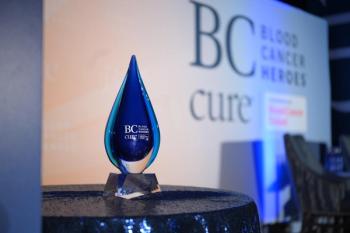
CURE honored four individuals whose compassion and leadership shaped support education and empowerment for people living with blood cancers.
Dr. Matthew Matasar discusses why stem cell transplant is still a standard, life-saving option in blood cancers and how CAR-T cell therapy is changing treatment decisions.
The FDA granted fast track status to UB-VV111 for patients with relapsed or refractory large B-cell lymphoma or chronic lymphocytic leukemia.

Dr. Christina Cho explains that a strong transplant program provides advanced treatments along with a supportive team for patients with blood cancers.
Press Release
The Leukemia & Lymphoma Society (LLS) is now Blood Cancer United.

Your diagnosis of an early-stage blood cancer, such as a MPN or MDS, means that something has changed in the way your bone marrow produces blood cells.
Advancements in transplant medicine for blood cancers have prompted updates in how doctors choose donors for allogeneic hematopoietic cell transplants.
Dr. Olalekan O. Oluwole, discusses treating patients from underserved communities with CAR T-cell therapy, as well as highlighted the therapy's evolution.
Emerging treatments like rusfertide may reduce phlebotomies and improve life for patients with polycythemia vera, according to Dr. Aaron Gerds.
Doptelet and new oral sprinkle granules is approved for children one year and older with chronic immune thrombocytopenia, showing 28% durable platelet response in study.
Outpatient CAR T therapy has reduced hospital stays by two-thirds while maintaining safety for those with blood cancers, according to Dr. Olalekan Oluwole.
Daniel Jernazian, a two-time cancer survivor, shares how sports, advocacy and meeting his idol shaped his journey through illness and recovery.
In part 4, the author reflects on her mother’s silent strength and unwavering love during her cancer journey, as she cared for her daughter while silently battling her own illness.
Patients in rural or underserved areas may have worse outcomes, highlighting the need for early support to address care access barriers.
Waldenström macroglobulinemia is often slow growing, with a 78% five-year survival rate, but chronic conditions can affect quality of life over time.
Valarie Traynham discusses some of ways her life has changed since being diagnoses with cancer, and what parts of her identity have remained the same.
At age 19, I was a medical student with big dreams — until stage 4 blood cancer changed everything, leading to a journey of resilience and quiet hope.
Advertisement
Advertisement
Trending on CURE
1
Why Cancer Survivorship Can Be the Hardest Part, Psychologist Says
2
Experimental Treatment Shrinks Tumors in Aggressive Adenoid Cystic Carcinoma
3
5-Year Data Support Personalized Vaccine in High-Risk Melanoma
4
From "Not Curable" to "May Be Curable": Joshua Richter, MD, on the New Reality of Multiple Myeloma
5