



From a “Jeopardy!” winner taking her wig off on the gameshow to childhood patients with cancer in Ukraine being bussed to neighboring countries to safely receive treatment, here’s what’s happening in the cancer space this week.
From a “Jeopardy!” winner taking her wig off on the gameshow to childhood patients with cancer in Ukraine being bussed to neighboring countries to safely receive treatment, here’s what’s happening in the cancer space this week.
The number of people developing leptomeningeal disease is increasing for the same reason that diagnoses of brain metastases are on the rise: People are living longer, giving cancer more time to spread.

Better therapies are on the horizon for cancer that has spread to the brain, including a clinical trial that matches patients with treatments based on unique genetic changes in brain metastases.

The Food and Drug Administration plans to speed up its review of Opdivo in the pre-surgical setting for patients with non-small cell lung cancer.

From NBC4 meteorologist Bob Nunnally’s break for cancer treatments to Mary J. Blige’s Super Bowl commercial encouraging others to undergo cancer screenings, here’s what’s happening in the cancer landscape this week.

Two experts explain how early-stage non-small cell lung cancer treatment has changed in recent years, particularly in the adjuvant setting, and offer future perspectives in this space.

On this episode of the “Cancer Horizons” podcast, former NFL linebacker Chris Draft discusses his wife’s experience with cancer, which led to her untimely death, and describes why advocacy is so important in the cancer world, especially with Cancer Moonshot bringing disparities to the forefront.
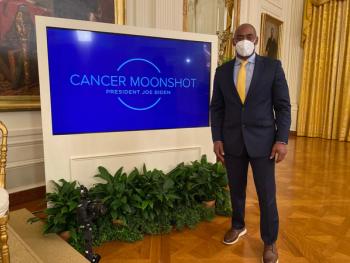
After the death of his wife, former NFL linebacker Chris Draft has been advocating for improvements for all patients with cancer — a mission that perfectly aligns with the recently relaunched Cancer Moonshot initiative.

Dr. Jessica Donington provides an overview of key ongoing clinical trials of systemic adjuvant therapy in early non-small cell lung cancer.
An expert surgeon explains the role patients have in adjuvant therapy selection for early non-small cell lung cancer.

Patients with lung cancer whose symptoms were managed by automated alerts to their care team through an electronic system after surgery had fewer post-surgical complications than patients who received standard care.
Dr. Martin Dietrich reviews some factors to consider when selecting an adjuvant therapy for early non-small cell lung cancer.
Jessica Donington, MD, MSCR, describes how she discusses adjuvant therapy with patients diagnosed with early non-small cell lung cancer.

Patients who limit alcohol intake during their cancer treatment may experience several health benefits, according to physicians from Tampa Bay Radiation Oncology.

Side effects from cancer treatment with immunotherapy, which may include vitiligo and certain rashes, may point to who will respond better to the treatment, although more research is needed to determine how much weight to put on these data.

From the lung cancer death of “Seinfeld” actress Kathryn Kates to a patient with cancer who broke a rowing world record, here’s what’s happening in the cancer landscape this week.
An expert oncologist details the design, outcomes, and clinical implications of the IMpower010 trial.
Dr. Jessica Donington explains how the results of the ADAURA trial changed the treatment algorithm in the adjuvant setting in early non-small cell lung cancer.

Researchers plan to enroll 60 patients in the first-in-human phase 1 clinical trial to assess the safety and preliminary clinical activity of an anti-CD39 monoclonal antibody to treat advanced solid tumors.

After promising phase 3 clinical trial results, the FDA will consider Libtayo for approval to treat patients with advanced non-small cell lung cancer, regardless of PD-L1 status.

A new study to evaluate the accuracy of a blood test for detecting lung cancer in high-risk adults has enrolled its first participant with plans to enroll thousands more.
Martin Dietrich, MD, PhD, describes the toxicity profiles of chemotherapy agents used in the adjuvant setting in early non-small cell lung cancer.
Two experts detail the use of adjuvant therapy, including chemotherapy, in treating early non-small cell lung cancer.
While robotic navigational bronchoscopy is an exciting advancement in diagnosing and staging lung cancer, the procedure does come with some risks and factors to consider, explained one expert.

In an interim analysis from a phase 3 trial of Keytruda, the use of the immunotherapy drug was associated with significantly improved disease-free survival in patients with non-small cell lung cancer.