

Myeloma
Latest News
Advertisement
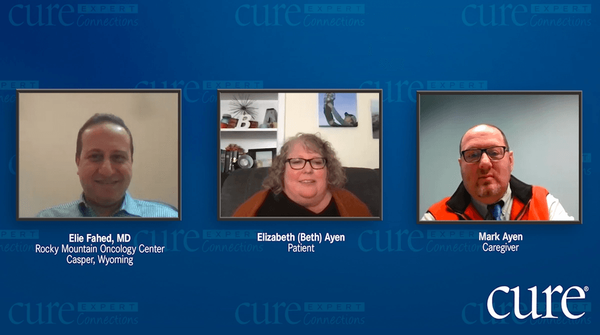
Multiple Myeloma Diagnosis: The Beginning of Beth’s Story
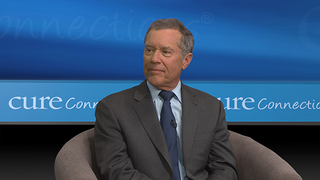
Elie Fahed, MD, provides an overview of what multiple myeloma is, and Beth walks us through her frustrating journey to initial diagnosis as an atypical patient.
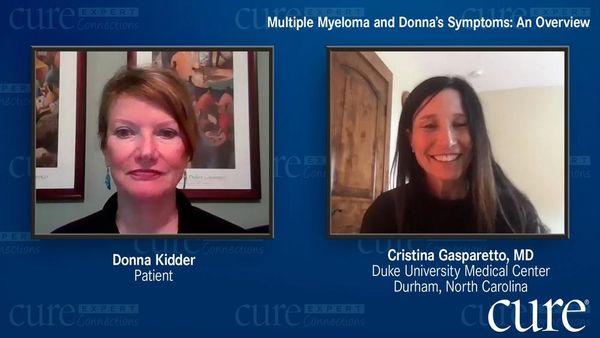
Multiple Myeloma and Donna’s Symptoms: An Overview
Cristina Gasparetto, MD, gives a brief overview of the multiple myeloma disease state and introduces us to Donna, one of her patients diagnosed with multiple myeloma.
Latest Videos

Advertisement
More News
The Food and Drug Administration’s recent approval of Abecma is an extremely significant development for patients with heavily pretreated multiple myeloma, according to an expert from the Dana-Farber Cancer Institute.

Most patients with newly diagnosed multiple myeloma treated with a combination of Kyprolis, Revlimid, dexamethasone and Darzalex achieved minimal residual disease negativity during a median follow-up of 11 months.

Treatment with Xpovio, Velcade and dexamethasone is effective, safe and tolerable for patients with multiple myeloma, specifically those who are at least 65 years and frail.
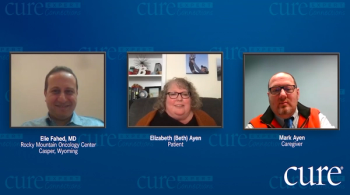
Elie Fahed, MD, provides an overview of what multiple myeloma is, and Beth walks us through her frustrating journey to initial diagnosis as an atypical patient.
In an interview, Dr. Nina Shah of UCSF Helen Diller Family Comprehensive Cancer Center discusses how she changed her perspective on finding a cure for myeloma and what her goals are when it comes to treating her patients.

CURE® is looking back at the Educated Patient® Multiple Myeloma Summit, a half-day virtual event to educate, inform and connect patients with multiple myeloma to a variety of experts in the field.
In an interview, Dr. Andrew Yee of Massachusetts General Hospital discusses how a multiple myeloma diagnosis affects a patient’s life and how hopeful he is about helping them lead normal lives.
In an interview, Dr. Nina Shah of UCSF Helen Diller Family Comprehensive Cancer Center explains what a myeloma millennial, or ‘myelennial,’ is, and how recent advances in multiple myeloma treatments inspired the term.

The biggest fear for many patients, according to an expert from The University of Texas MD Anderson Cancer Center, is when they hear that myeloma, for most patients, is not curable. However, she notes that every few years patient survival is increasing.
“This approval is an important advancement for patients whose disease has relapsed and reinforces the potential for Sarclisa to become a standard of care in relapsed or refractory multiple myeloma,” said Dr. Thomas G. Martin.

An expert discusses therapies that are changing the treatment landscape and the research to make this disease more livable.
Efficacy is one of the most important drivers in determining which cell-based therapy a patient with multiple myeloma receives, according to an expert. However, she says, other factors, such as how aggressive the disease is, may play a major role.
Abecma is the first cell-based gene therapy approved for the treatment of patients with relapsed and refractory multiple myeloma who did not respond to at least four treatments, or whose disease returned after those four lines of therapy.
There is a lot of hype on T-cell engagers and CAR T-cell therapy, but there are other new and exciting immunotherapies in myeloma not talked about that may be approved in the near future, according to an expert.
Although a multiple myeloma diagnosis can be overwhelming for patients, an expert from the Massachusetts General Hospital Cancer Center notes how the disease is very treatable, and that patients can go on to lead full lives.
In this episode of the “CURE® Talks Cancer” podcast, we’re honoring Multiple Myeloma Awareness Month by speaking with Dr. Andrew Yee, about the signs and symptoms of this rare form of cancer, what the current treatment paradigm looks like and what advice he has for newly diagnosed patients.

An expert discusses the treatment options that patients with early relapse myeloma have to treat their recurrent disease, which often follows a cyclical pattern.
View the full CURE Educated Patient Multiple Myeloma Summit on demand.
The agency granted accelerated approval to Pepaxto in combination with dexamethasone in adult patients with relapsed or refractory multiple myeloma, who received at least four prior lines of therapy.
Results from the phase 2 KarMMa trial showed that 73% of patients had a response to the CAR-T cell therapy, including 33% who experienced a complete response or better.

The Food and Drug Administration has had a busy winter so far, approving several new agents to treat a variety of cancers. Here are seven recent approvals that patients with cancer may have missed.
Quality of life improved in patients treated with Darzalex, Revlimid and dexamethasone compared with Revlimid and dexamethasone, and were present regardless of age, functional status and the depth of their treatment response.
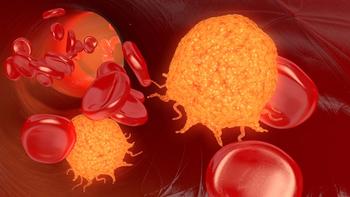
Melflufen with dexamethasone was an effective treatment option for patients with relapsed or refractory multiple myeloma previously treated with a specific chemotherapy drug and/or an anti-CD38 monoclonal antibody.

A caregiver discusses with her granddaughter the cancer diagnosis and treatment of a loved one.
The Food and Drug Administration lifted a clinical hold on the MELANI-01 trial, evaluating UCARTCS1A, a CAR T-cell product in patients with relapsed or refractory multiple myeloma.
Advertisement
Advertisement
Trending on CURE
1
Why Is Lung Health Key to Survivorship After Cancer Treatment?
2
U.S. Soccer Legend Kasey Keller Reveals Lymphoma Journey
3
New Combination Treatment Approach Studied in Pancreatic Cancer
4
The Power of Personalized Care in Breast Cancer Treatment
5