
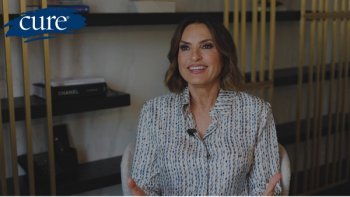
Commentary|Videos|April 28, 2026
Understanding Fertility Preservation Before Cancer Treatment
Author(s)Dr. Tony Anderson
Fact checked by: Ryan Scott
Dr. Tony Anderson speaks about fertility preservation options for men and women before cancer treatment, emphasizing early testing and timely referral.
Advertisement
When a cancer diagnosis is made, conversations about fertility preservation often need to happen quickly.
In this discussion, Dr. Tony Anderson, CEO and Founder of IVF Academy USA, speaks with CURE about the most common options available for women and men before starting cancer treatment. He explains how age, ovarian reserve, and simple testing can help guide decision-making, while underscoring why early action and timely referral to fertility specialists are critical.
Transcript
For patients who are hearing about fertility preservation for the first time today, what are the most common options available for women and for men before starting cancer treatment?
The most common options? Really, it's very dependent on how young a patient is. We like to say, "how young" instead of "how old." The less young a patient is, the fewer oocytes there are available. That's why, really, time is of the essence. I would say if you're less than 35, start as quickly as you can. If you're greater than 35, you really need to see what your ovarian reserve is.
They can do a test today called AMH (anti-Müllerian hormone), and that'll give you a very good spot check of what your ovarian reserve is. It's very much like doing an A1c for your glucose; basically, it measures how many follicles you probably still have in your ovaries. A good AMH would be greater than 1.5 or 2; the normal range starts around 0.5 and goes up, but the higher your AMH, the more eggs you have. It's probably a good idea to get that test right away and then plan to see a fertility specialist.
I would suggest that every oncologist or OB-GYN have one or two fertility specialists that they recommend. Particularly in the big cities, every big city has IVF labs. Where we have the biggest struggle is really around the middle of the country. Still half the country lives there, but in much more rural areas.
You have the large cities around the perimeter of the United States, but around the center, they call them "fertility deserts" or "oncology deserts." Those people may have to drive to a fertility center in a city, and it's not always convenient to do that. So, the sooner you act, the better it's going to be.
Transcript has been edited for clarity and conciseness.
For more news on cancer updates, research and education,
Advertisement
Related Content
Advertisement

Advertisement
Advertisement
Trending on CURE
1
Trodelvy Plus Keytruda Shows Lasting Benefit in Metastatic Breast Cancer
2
Mariska Hargitay Honors Father Through Myeloma Awareness Effort
3
Changing Surveillance Routines Brings New Survivorship Challenges
4
Oncologist Answers Most Asked Questions About Colorectal Cancer
5