
Discussing emerging therapies in melanoma
Discussing emerging therapies in melanoma
Understanding Immune-Modulating Antibodies
Updates in adjuvant and neoadjuvant therapy in melanoma
Results demonstrating the efficacy of Bavencio highlight the importance of incorporating recent clinical trial successes into the treatment conversation.
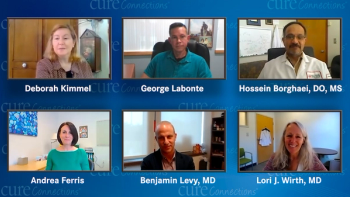
Deborah Kimmel describes the symptoms that led to a diagnosis of advanced non–small cell lung cancer and explains her journey to connecting with Dr Benjamin Levy and undergoing molecular testing.
The rationale for testing 2 patients with cancer, Deborah and George, with molecular testing prior to managing their cases with novel therapy.
Thomas E. Hutson, DO, PharmD, discusses the historic and current goals of therapy for the treatment of RCC.
Kidney cancer expert, Dr Thomas E. Hutson, comments on treatment approaches for the management of renal cell carcinoma.
Anna C. Pavlick, D.O., describes the various challenges health care providers may face when treating patients with locally advanced basal cell carcinoma (laBCC).
Insights into cemiplimab treatment monitoring and management in locally advanced basal cell carcinoma (laBCC).
An expert discusses treatment options available for patients with locally advanced basal cell carcinoma (laBCC) who don’t respond or are intolerant to the first-line therapy option.

View the full CURE® Educated Patient® Webinar: Biomarkers, Why Genomic Testing Matters on demand.
According to an expert from The University of Texas MD Anderson Cancer Center, patient enrollment in clinical trials that involve genomic testing are important in progressing research in their cancer types.
Drs Benjamin Levy and Lori J Wirth describe the differences between germline and somatic mutations, explain how these are detected and used to guide treatment for lung and thyroid cancer, and comment on counseling patients about concerns of hereditary findings.
Benjamin Levy, MD, briefly describes the difference between driver mutations and immunotherapy biomarkers in non–small cell lung cancer and explains how decisions for immunotherapy or targeted therapy are made based on results of molecular assays.
An expert in urologic oncology reviews the staging, grade, and types of renal cell carcinoma.
Thomas E. Hutson, DO, PharmD, provides insight on the diagnosis of renal cell carcinoma (RCC) and discusses classic signs and symptoms of the disease.
In patients with advanced gastrointestinal stromal tumors, a dose escalation of Qinlock after recommended treatment with the agent may be the best next step, answering for the lack of a next approved agent after Qinlock.
Anna C. Pavlick, DO, provides an overview of hedgehog inhibitors, a first-line treatment option for patients diagnosed with locally advanced basal cell carcinoma (laBCC).
A discussion about multidisciplinary management of locally advanced basal cell carcinoma (laBCC) and how dermatologists and medical oncologists collaborate within the care of a patient.
An expert discusses features of a skin lesion that would prompt a skin biopsy in the diagnosis of locally advanced basal cell carcinoma (laBCC).
Anna C. Pavlick, D.O., provides an overview of locally advanced basal cell carcinoma (laBCC) that includes the different risk factors and clinical presentations.
Opdivo was the first PD-1 inhibitor to show durable responses in patients with esophageal squamous cell carcinoma.

View the full CURE Educated Patient Skin Cancer Summit on demand.
Monjuvi and Revlimid attained extended remission and improved survival in patients with relapsed or refractory diffuse large B-cell lymphoma.
Lori J. Wirth, MD, describes what information she looks for from results of molecular testing that help inform treatment for her patients with thyroid cancer.
Andrea Ferris, of the LUNGevity Foundation, explains why shared decision-making is important when recommending molecular testing to patients with lung or thyroid cancer and highlights resources provided through her organization that support patients and health care professionals.
The findings open up the door for a fourth-line treatment option in patients with advanced gastrointestinal stromal tumors with disease progression.
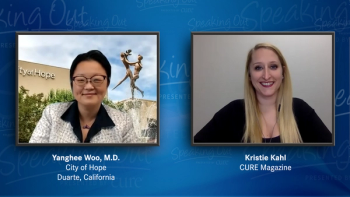
Dr. Yanghee Woo highlights barriers that patients with gastric cancer face when looking to enroll in a clinical trial, and comments on the need for more participation in research trials that investigate ways to improve how the condition is screened for and treated.
Common questions asked by patients with lung or thyroid cancer who have been referred for biomarker testing and advice for setting expectations from test results.