


Eighteen months into a metastatic breast cancer diagnosis, and my thinking--and life--has changed in an unexpected way.
Eighteen months into a metastatic breast cancer diagnosis, and my thinking--and life--has changed in an unexpected way.

In the analysis, there was as much as a 92 percent difference in median overall survival (OS) seen between patients treated in randomized controlled trials and "real world" data.

A team of researchers just discovered a set of risk factors that could help patients with ductal carcinoma in situ (DCIS) evaluate the potential benefits of radiation after breast-conserving surgery.

FDA’s Oncologic Drugs Advisory Committee (ODAC) ultimately voted against the accelerated approval of rociletinib for patients with metastatic EGFR T790M–mutated non–small cell lung cancer (NSCLC) who have previously received an EGFR-targeted therapy.
Thoughts from a cancer dancer.

This new study set out to evaluate the mortality differences between married and unmarried individuals.

After multiple clinical trials, atezolizumab was granted a priority review by the FDA. A decision is expected this fall.

The FDA approved Venclexta for patients with CLL who have a 17p deletion and failed at least one prior therapy.
I ran this race last April knowing that something was not right with my body. I just knew...
Breast cancer and melanoma survivor faces her fear of recurrence and offers two benefits of living with constant uncertainty.

As treatments for kidney cancer continue to evolve, oncologists, surgeons and patients are faced with a number of questions.

Doctors are optimistic about the future of immunotherapies for the treatment of brain cancer.

O’Shaughnessy highlighted a group of agents that encompasses entirely new ideas and new options for patients as well as novel avenues from follow-up data from clinical trials.

A recent study pointed out that food intake may play a role in lung cancer, as people who had a diet with a higher glycemic index (GI) were at greater risk for developing the disease.
The field of immunotherapy has been revitalized thanks to the approval of checkpoint inhibitors, and according to Mario Sznol, this could prove beneficial to patients with RCC.
We are often far harsher on ourselves than we would be with others.
Learning to move forward after breast cancer is a choice many have a difficult time making.
At Bright Pink, we feel fortunate to hear stories each day from young women who are taking action when it matters most.

Four new drugs were approved in 2015 to treat multiple myeloma, and Sundar Jagannath is optimistic about the coming years.

A session at the 2016 National Comprehensive Cancer Network (NCCN) Annual Conference opened today with a spotlight on finding more effective ways to encourage and deliver palliative care services across a variety of settings in oncology.
We wouldn't have rainbows without rain.

Although there were no major changes to the 2016 update to the National Comprehensive Cancer Network (NCCN) Breast Cancer Guidelines, there were some “tweaks.”

Although immunotherapies have been approved for use for patients with metastatic melanoma, doctors are still apprehensive to use them as a frontline treatment option.
Ed's awareness of the happenings around him created great admiration for nurses.
A new recirculating compression system has been designed to help patients manage their lymphedema.
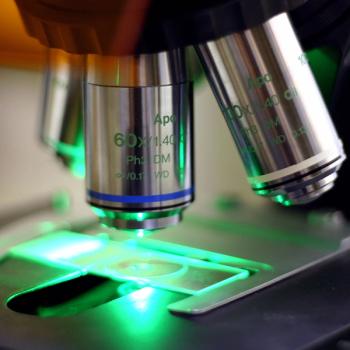
The treatment landscape of chronic lymphocytic leukemia is rapidly evolving, according to Jeffrey Jones, an assistant professor at The Ohio State University Comprehensive Cancer Center.
Balancing hope and fear? I can do that.
Learn from a cancer survivor who wasn't proud of how she handled cancer the first time.
If you’ve been through the cancer journey, you’ve most likely bumped into someone professing the benefits from whatever tools were a part of their recovery. The information and promises can be overwhelming, contradicting and confusing.
A cancer diagnosis can easily get you thinking how great it would be to be anyone else. I learned very quickly that this is a wish I hope never to have granted.