
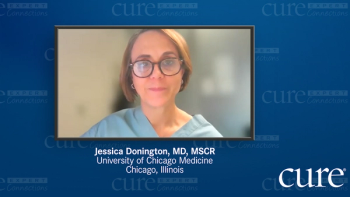
Martin Dietrich, MD, PhD, and Jessica Donington, MD, MSCR, provide an overview on early non-small cell lung cancer and the available treatment options.
Martin Dietrich, MD, PhD, and Jessica Donington, MD, MSCR, provide an overview on early non-small cell lung cancer and the available treatment options.
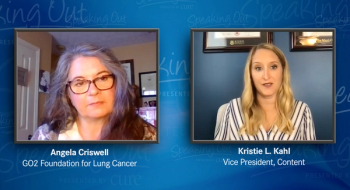
Angela Criswell, director of quality screening and program initiatives at GO2 Foundation for Lung Cancer, discusses early detection and screening for lung cancer.
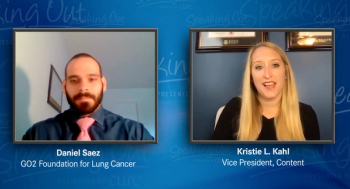
Daniel Saez, treatment and trials navigator at the GO2 Foundation for Lung Cancer, discusses biomarker testing and precision medicine in lung cancer.
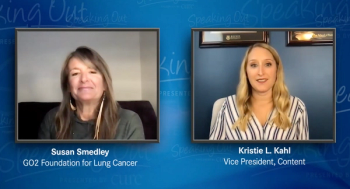
Susan Smedley, national manager of community fundraising and endurance events at GO2 Foundation for Lung Cancer, offers resources for patients with lung cancer and their loved ones, as well as ways to get involved in the community.
Susan Smedley, national manager of community fundraising and endurance events at GO2 Foundation for Lung Cancer, discusses quality of life in lung cancer, and ways patients can communicate preferences to their health care providers.
Communication, self-advocacy and having someone in your corner are all critical tools to bring to a cancer care visit, says an expert from MedStar Georgetown University Hospital.
One male breast cancer survivor explains why he considers his cancer experience an “adventure into the unknown,” where he draws inspiration from every survivor he meets.
As part of its Speaking Out video series, CURE spoke with Dr. Rebecca Moroose, from Orlando Health Cancer Institute, and Dr. Virginia G. Kaklamani, from UT Health San Antonio, about the National Comprehensive Cancer Network guidelines and what they mean for patients.
As part of its CURE Speaking Out video series, CURE spoke with Dr. Rebecca Moroose, from Orlando Health Cancer Institute, and Dr. Virginia G. Kaklamani, from UT Health San Antonio, about shared-decision making with the NCCN Guidelines on metastatic triple-negative breast cancer.
Dr. Don S. Dizon discusses how cancer centers can be more inclusive to the LGBTQ+ community, from the naming of the institutions to the types of magazines found in the waiting rooms.
In recent trial results, a dose reduction of Xpovio (selinexor) was associated with longer progression-free survival and duration of response while also reducing side effects in patients with multiple myeloma.
Clinical trial results show that adding Keytruda to chemotherapy prior to surgery for triple-negative breast cancer can improve outcomes and hopefully “increase the chances for patients to be cured,” according to an expert.

Watch the entire Metastatic Breast Cancer Heroes™ presentation here!

CURE®’s second episode of its cooking show, Heal at Home, is here! And this time, we are bringing cancer survivors, patients and their loved ones the nutrition with a dash of holiday cheer.
People who have successfully navigated difficult times in the past may be able to use those previous coping strategies to help them weather new stress related to a cancer diagnosis, treatment or survivorship, according to an expert from the George Washington University Cancer Center.

LeVar Burton, most noted for his roles in “Reading Rainbow” and “Star Trek”, stresses how important storytelling is — both in everyday life and in health care settings.

Several CURE® Calendar Contest winners describe their winning creations and discuss how they used art as a medium of coping with the struggles of cancer.

View the full CURE® Educated Patient® Webinar: Testing and Treatment for Non-Small Cell Lung Cancer on demand.
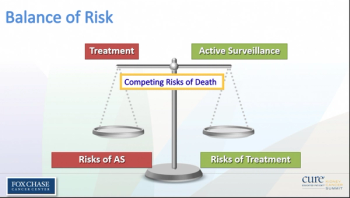
Some patients with kidney cancer do not need to rush into the operating room, explained Dr. Alexander Kutikov.

Several CURE® Calendar Contest winners explain the stories behind their winning artwork and how their artmaking helped them through the difficulties of cancer.
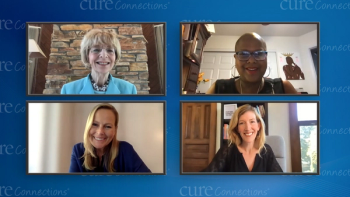
The panel provides closing thoughts on patient advocacy and advocacy activities.
Julie Larson, LCSW, provides insight into reasons for joining clinical trials, finding trials from peers, and trials for purposes other than cancer treatment.
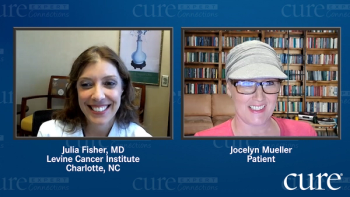
Patient Jocelyn Mueller and oncologist Julia Fisher, M.D., describe some of the adjustments that had to be made to Jocelyn’s treatment for HER2-positive breast cancer due to the COVID-19 pandemic.
The panel discusses resources available for locating relevant clinical trials for patients with metastatic breast cancer.
Shirley Mertz, MA, JD, provides an overview of clinical trials and how they are conducted.
View the full CURE® Educated Patient® Webinar: Meet the 2021 Lung Cancer Heroes® on demand.

View the full CURE Educated Patient Breast Cancer Summit Outside of Therapy Session on demand.
View the full CURE Educated Patient Breast Cancer Summit Novel Therapies Session on demand.
View the full CURE Educated Patient Breast Cancer Summit Multi-Disciplinary Approaches to Early-Stage Breast Cancer Session on demand.
Julie Fisher, M.D., has a conversation with patient Jocelyn Mueller about the importance of good support networks when living with HER2-positive breast cancer.