




Whoever said there's no way to make time stand still clearly never had to endure the excruciating wait for scan results.
Whoever said there's no way to make time stand still clearly never had to endure the excruciating wait for scan results.

Recent years brought many advances in the field of immunotherapy in melanoma, but more still needs to be done.

Keytruda is showing benefit to some patients with sarcoma, according to interim results from a phase 2 trial.

Surprisingly, Opdivo did not improve progression-free survival for a subset of patients with lung cancer in the CheckMate-026 trial. CURE sat down with Paul A. Bunn Jr to discuss why.
Of the possible 1,000,000 Lynch syndrome carriers in the USA alone, it is estimated that only about 5 percent have been tested.
Why know the odds if they're useless?

New standards were just established for patients undergoing surgery for DCIS.

Jorge Garcia offers insight about the benefits of Cabometyx and the drug's impact on RCC.
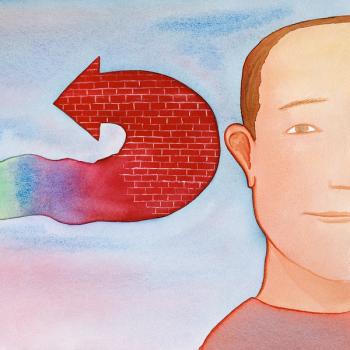
A recent study found that certain genetic mutations could play a role in cisplatin-induced hearing loss.
One survivor's personal experiment in finding relief from lymphedema.
Our cancer clock never stops ticking, but we can stop looking.
Randy F. Sweis talks to CURE about the future of treatment for GU cancers.
Here are 12 things I learned after hearing the words, "You have cancer."

Selumetinib plus docetaxel did not slow progression in lung cancer any more than docetaxel alone.

When used in combination, Cotellic and Zelboraf showed a significant reduction in death rates for some patients with melanoma.

Volker Heinemann says early tumor shrinkage may be a better predictor than progression-free survival in colorectal cancer.

Jonathan Riess emphasizes the importance of testing for ROS1 and TRK in patients with lung cancer so that treatment options can be explored accordingly.
Post traumatic stress disorder can occur in women who've experienced the trauma of breast cancer.

Patients now have one more option to combat chemotherapy-induced nausea and vomiting after the FDA approval of Sustol.

CURE spoke with Celestia S. Higano on common problems that survivors of prostate cancer face.

While most survivors of childhood cancers are well adjusted, a recent study revealed that more testing is needed for psychosocial late effects in certain groups.
This is my wish list for all cancer survivors across all types of cancer who struggle with cancer's emotional isolation.

Chemotherapy-induced nausea and vomiting can be reduced with certain FDA-approved drugs.

A recent study proved that patients with early stage lung cancer who live in areas with poor air quality have shorter survival spans than those who live where the air quality is better.

Though it is a difficult subtype to treat right now, Cynthia Ma is optimistic about emerging treatment options for triple-negative breast cancer.
The words "cancer" and "thank you" don't usually go together.
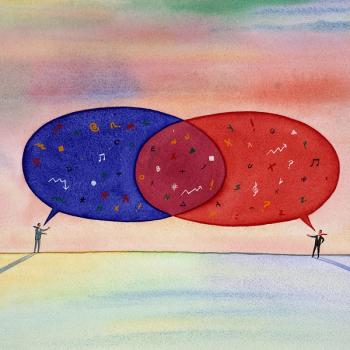
Someone who has never experienced cancer may feel apprehensive about how to talk to someone who has been diagnosed. Here are my two cents about communicating with a cancer patient.

Ronald Natale, medical oncologist at Cedars-Sinai Medical Center, discusses treatment options for patients with EGFR-mutated lung cancer.

Two recent studies showed that insurance disparities could end up being treatment and survival disparities for patients with cancer.

ASCO and SGO just made new guidelines stating that neoadjuvant chemotherapy is the best first-line treatment for some women with ovarian cancer.